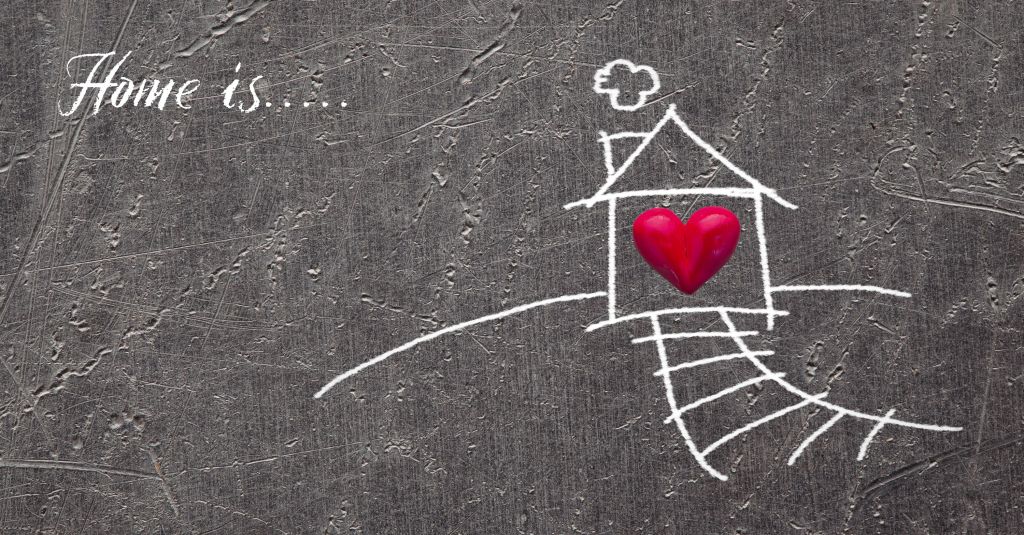
We grow up believing that home is an address.
A street name.
A front door.
A place we return to at the end of the day.
And yes, houses matter. Walls protect us from wind and rain. Roofs keep us dry. Doors lock. Windows open. These things are important.
But at some point in life, we realize something deeper.
Home is not the building.
Home is the feeling.
It is the moment your shoulders drop without you noticing.
It is the quiet inside your chest when you no longer feel the need to prove anything.
It is the absence of the urge to be somewhere else.
Home is the place — or the person — where your inner restlessness becomes still.
Sometimes home is a room. A kitchen filled with the smell of coffee. A couch that carries the shape of your evenings. The soft sound of footsteps in the hallway.
Sometimes home is a person.
The one who understands your silence.
The one who knows your history without needing explanations.
The one who sees you clearly — and stays.
To say someone “feels like home” is not poetic exaggeration. It means they bring safety without effort. With them, you do not perform. You do not adjust your personality. You do not shrink or stretch to fit expectations.
You simply are.
And that is rare.
We often think of home as something physical — a location on a map. But life teaches us otherwise. People move. Jobs change. Houses are sold. Furniture is replaced. The physical space shifts over time.
Yet the feeling — that sense of belonging — can travel with us.
Home is the bridge between who we were and who we are becoming. It holds our memories. The invisible marks on the doorframe measuring a child’s height. The table where difficult conversations happened. The quiet corner where dreams were formed.
Home keeps our past safe while giving us space to grow into the future.
But here is something even more important:
Home is also internal.
If home were only walls and furniture, we would lose it the moment we stepped outside. Instead, real home lives inside us.
It is the place within where we can remove the mask.
Outside, we all perform roles. We are responsible adults. Employees. Parents. Neighbors. Polite strangers. We manage impressions. We measure words.
Home is where that performance ends.
It is the relief of being “off the clock.”
It is the comfort of not being evaluated.
It is acceptance without conditions.
That is why someone can feel at home in a small apartment — or feel completely lost in a large house.
Because home is not size. It is not design. It is not decoration.
It is belonging.
It is safety.
It is recognition.
Our senses quietly help build this feeling. The familiar scent of laundry. The soft hum of appliances in the background. The way your shoes naturally land in the same corner near the door. The specific mug you reach for without thinking.
These small rituals tell your brain: You are safe here.
But beyond all rituals, beyond all walls, home is alignment.
It is when your inner world matches your outer world.
When who you are inside does not need translation.
When your heart does not feel divided.
Home is not where everything is perfect.
Home is where you do not have to be perfect.
And maybe that is why we spend so much of our lives searching for it — in places, in people, in achievements.
Yet the deepest version of home begins when we stop running.
When we no longer need to escape our own thoughts.
When we can sit quietly and feel grounded.
Home is the emotional gravity that pulls us back to ourselves.
And perhaps the most beautiful realization is this:
When we become at home within ourselves, we can create home for others.
In the way we listen.
In the way we accept.
In the way we walk beside someone instead of in front of them.
Home is not something we find once.
It is something we build — gently, daily — inside and between us.
And when we feel it, even for a moment, we understand:
We are not lost.
We are exactly where we need to be.
GK

 Georgi Kisyov – Reflections & Books