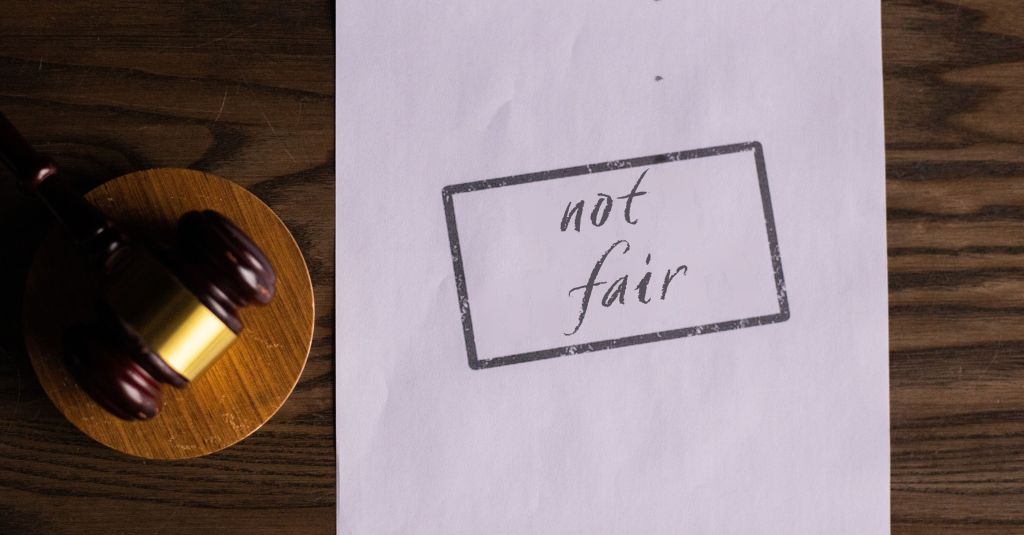
At some point in life, almost all of us say it.
“It’s not fair.”
We say it when we are tired.
When we feel unseen.
When someone else seems to move ahead while we stay in the same place.
Sometimes we whisper it. Sometimes we shout it inside.
And often, we use it as a full stop — a sentence that ends the conversation.
But here is the truth we rarely want to face:
Life was never fair.
And it never promised to be.
Some people are born into money.
Some are born into safety.
Some are born beautiful, confident, or surrounded by opportunities they did nothing to earn.
Others start with less.
Less support. Less time. Less margin for mistakes.
Some begin life already carrying weight they didn’t choose.
That imbalance can feel cruel. And sometimes it is.
But unfair does not mean broken.
And it does not mean hopeless.
We grow up believing that if we work hard enough, or wait long enough, “fair” will eventually arrive — like a delayed train that is simply running late.
It won’t.
Fair is not on its way.
Fair is not catching up.
Fair is not preparing an apology.
Fair is a story we tell ourselves when we don’t yet know what to do with reality.
And this is the part that’s hardest to admit:
Most people don’t say “it’s not fair” because they want justice.
They say it because they want permission to stop.
To stop trying.
To stop choosing.
To stop carrying responsibility for their own next step.
“It’s not fair” can become a shelter.
A quiet place where we rest without moving.
I understand that place. I’ve stood there myself.
There were moments when I looked at my life and thought:
If circumstances were different…
If timing had been kinder…
If I had been given what others received…
But here’s the line we rarely cross — and the one that changes everything:
The people who move forward don’t wait for fair.
They work with what they have.
Not with what they deserve.
Not with what would be just.
With what is.
Some have talent but no discipline.
Some have discipline but no recognition.
Some have ideas but no support.
Some have strength but no map.
Nobody gets a complete set.
The difference is not in the cards dealt — it’s in the decision to play the hand anyway.
Winners are not the people life favored.
They are the ones who stopped arguing with reality.
They didn’t deny the unfairness.
They just refused to let it be the final word.
There is a quiet moment — rarely talked about — when a person realizes that waiting for fairness is costing them more than the unfairness itself.
Waiting costs time.
Waiting costs courage.
Waiting slowly turns frustration into identity.
And once that happens, the sentence changes from
“It’s not fair”
to
“This is just how my life is.”
That is the real danger.
Because life may be unfair — but it is also responsive.
It responds to movement.
To effort.
To consistency.
Not immediately. Not evenly.
But eventually.
When we stop asking, “Why don’t I have what they have?”
and start asking, “What can I build with what I have?”
something shifts.
Not magically.
Not dramatically.
Quietly.
We become less bitter.
Less stuck.
More grounded.
Fairness is a comforting idea.
But responsibility is a liberating one.
Because responsibility means your story is still being written.
You don’t need life to be fair to move forward.
You need honesty.
Endurance.
And the courage to stop waiting for conditions that may never come.
This is not a motivational message.
It’s a practical one.
Life is not fair.
It never was.
But it is still yours.
GK

 Georgi Kisyov – Reflections & Books
Oh, brilliant! This is spot on, Georgi – but doesn’t it take a long time for the penny to drop? (Well it did for me…)
LikeLiked by 2 people
Thank you so much. And yes… it really does. For most of us, that penny doesn’t drop once — it drops slowly, over years, through experience. I think that’s part of what makes the realization real rather than just an idea.
GK
LikeLiked by 2 people
Great “practical” message for a Monday morning.
LikeLiked by 1 person
Thank you so much. I’m glad you liked it. Have a wonderful new week.
GK
LikeLike
It’s been two years and three months since my son took his own life. I’ve cried “It’s not fair” so many times, I’ve lost count. He was only 50 years old, married with two teenaged children. He had a nice house, a good (if exhausting job), but no time to himself – ever. I’ve finally begun to understand his probably ‘why’, but I wish I’d had a chance to help him through whatever it was. THAT wasn’t fair – to be denied that one opportunity. But, it’s water under the bridge now and life does go on – painfully.
I enjoy your posts so very much. Thank you.
LikeLiked by 1 person
Thank you for trusting this space with something so tender. I’m deeply sorry for your loss. There are moments where “it’s not fair” isn’t a reflection — it’s a cry from the deepest place of love and grief. And you’re right: being denied the chance to help, to reach in one more time, is a kind of unfairness that no words can soften.
Your honesty about still living, still carrying on — painfully — matters more than any neat conclusion ever could. Nothing about this needs to be resolved or justified. I’m grateful you’re here, and that you shared this. Thank you for your kindness, and for reading. 🤍
GK
LikeLike
“When we stop asking, “Why don’t I have what they have?” and start asking, “What can I build with what I have?” something shifts.”
Great practical perspective ~ Rosie
LikeLiked by 1 person
Thank you, Rosie 🤍
I’m glad that line spoke to you. That shift feels small on the surface, but it quietly changes how we stand in our own lives. I really appreciate you naming it as practical — that was exactly the intention.
GK
LikeLiked by 1 person
Thank you for giving me another new perspective ❤️
LikeLiked by 1 person
Hello,
You are very welcome.
Have a wonderful new week.
GK
LikeLike
Very well stated.
LikeLiked by 1 person
Thank you so much. Have a great new week.
GK
LikeLiked by 1 person
You also have a great week.
LikeLiked by 1 person
This is very true. My life lesson #1 to my kids when they were old enough, which is not that old “The world does not give a rats a** about you” many things, most even from jobs, to pay, to a simple traffic ticket may not seem unfair. You can’t control that so let it go and move on. Time waits for nobody.
LikeLiked by 1 person
That’s a hard lesson, but a real one — and often learned early, whether we want it or not. Understanding what we can’t control helps us stop wasting energy fighting it, and focus instead on how we respond. Time does keep moving, and choosing how we move with it matters. Thank you for sharing this perspective.
GK
LikeLiked by 1 person
True, life isn’t fair but we get a chance to improve and change it by being who we are! Thanks!
LikeLiked by 1 person
Yes — exactly. We may not get fairness, but we do get the chance to shape our lives by showing up as we are and making small, honest choices. Thank you for reading and sharing this.
GK
LikeLike
100%. Thanks for the timely reminder about the reality of life. Well said.
LikeLiked by 1 person
Thank you — I’m glad it felt timely. Sometimes a simple reminder of reality helps us stand a little steadier in it. I appreciate you reading and being here.
GK
LikeLiked by 1 person
Beautifully written, as everything you write. I shared this with a friend. She replied that this was precisely what she needed right now. We never entirely know how or who we influence. Thank you!
LikeLiked by 1 person
That’s incredibly touching — thank you for sharing this 🤍
Knowing the words reached someone who needed them, even indirectly, is the quiet gift of writing. You’re right — we rarely see the full ripple of what we put into the world. I’m grateful you passed it along, and thank you for being here.
GK
LikeLiked by 1 person
This is the best read of the month, so far.
Life is, usually, what you make of it. If my life is hard at the moment, but I am the only one to blame for it. My hardships are the result of a series of bad decisions I made in the past.
LikeLiked by 1 person
Thank you — that means a lot to hear.
I really respect your honesty here. Taking responsibility for past decisions isn’t about blame; it’s about clarity. And clarity, even when it’s uncomfortable, is often where change quietly begins. We’re all shaped by choices, but we’re not frozen by them. I’m grateful you shared this so openly.
GK
LikeLiked by 1 person
Ahhh… that familiar phrase we all carry—“it’s not fair”—and then you patiently walk us to the place we’d honestly rather avoid: what happens when that line becomes a stopping point instead of an observation. The idea that unfairness can quietly turn into permission to stop is sobering. It made me pause and wonder where I might be lingering there without even realizing I’ve built a little shelter out of it.
I also appreciate how you refuse to sugarcoat reality while still leaving room for hope. There’s no denial of imbalance, loss, or unchosen weight, just the steady reminder that fairness was never the hinge life swung on. And the thought that waiting for fairness can cost more than the unfairness itself? That feels painfully true. The way waiting can slowly shape identity, until “it’s not fair” turns into “this is just how my life is,” is a warning worth sitting with.
What stayed with me wasn’t motivation as much as clarity. The shift from asking “why don’t I have what they have?” to “what can I build with what I have?” feels small, but it’s profound. It reframes responsibility as something strangely freeing. Life may not be fair, but the reminder that it’s still responsive to movement, to effort, to courage-left me thoughtful, and quietly encouraged.
LikeLiked by 1 person
Thank you for this — truly.
You articulated the heart of the piece with such care and precision. That idea of building a small shelter out of “it’s not fair” — without even noticing — is exactly the quiet danger I was trying to name. Not as judgment, but as awareness.
I’m especially grateful you felt the difference between motivation and clarity. I didn’t want to soften reality or offer hope as a shortcut, only to point to that subtle shift where responsibility stops feeling heavy and starts feeling freeing. Your reflection stayed with me. Thank you for meeting the words with such depth and honesty.
GK
LikeLike
Life must not be stagnant. We keep moving, evolving, growing, learning, and becoming even if we have an unfair world. When we appreciate what we have, and just start even if there’s fear to fail, there is hope. And just let the Creator do His miracles.
LikeLiked by 2 people
Beautifully said. Life really does ask us to keep moving — not because it’s easy, but because stagnation slowly closes us in. Appreciating what we have and beginning even with fear is often where growth quietly starts. And yes, there are things beyond our control, moments where we do our part and trust the rest to something greater than us. Thank you for sharing this hopeful reflection.
GK
LikeLiked by 1 person
My pleasure, GK. Happy Thursday!
LikeLiked by 1 person