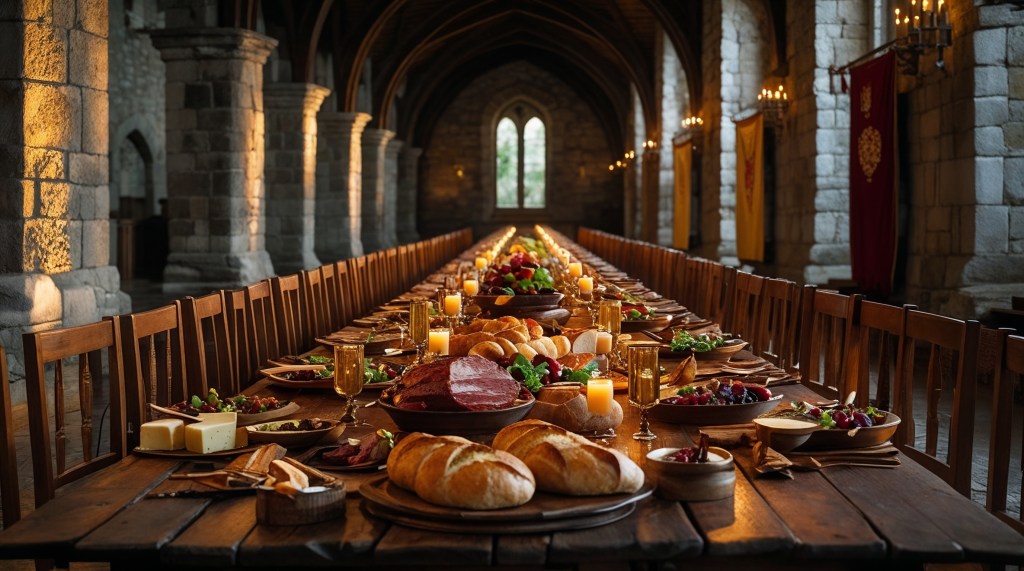
Life, I think, is a long walk around a dining table.
In the beginning, the table is big. Bigger than we need, actually. It’s surrounded by chairs in every direction—some pulled close, others slightly crooked, a few barely used but still there. As children, we don’t question the setup. Everyone belongs. Everyone has a place. Friends, relatives, neighbors, classmates—there’s room for all of them, and no one is counting.
We don’t choose the table then. We’re simply invited to it.
Over time, something changes. Not suddenly, not dramatically—but steadily. One chair is no longer pulled out. Another stays empty longer than usual. Someone moves away. Someone disappoints us. Someone’s values shift. Sometimes, ours do. Conversations that once flowed easily now feel forced. Laughter becomes polite. Presence turns into obligation.
And slowly, without ceremonies or announcements, chairs begin to disappear.
This part of life often hurts more than we admit. We’re taught to believe that loss only counts when it’s loud—breakups, endings, goodbyes. But the quieter exits are the ones that shape us most. The friend who stops calling. The relationship that becomes one-sided. The seat that remains empty long enough that removing it feels less painful than hoping again.
We carry guilt about this. We wonder if we failed. If we should have tried harder. If keeping every chair was a measure of our worth.
But a dining table isn’t meant to be crowded forever.
As we grow older, we begin to understand something important: not every person who once sat with us is meant to stay. Some people were right for a season—for shared beginnings, shared struggles, shared versions of ourselves that no longer exist. Their leaving doesn’t erase what was real. It simply acknowledges what is.
There is courage in recognizing when a chair no longer belongs at your table.
This isn’t cruelty. It’s honesty.
Because the truth is, a table filled with the wrong people feels lonelier than a small table shared with the right ones. Presence matters more than numbers. Connection matters more than history. And effort must travel both ways to mean anything at all.
At some point, we find ourselves replacing the big table with a smaller one.
Not because we failed at life—but because we refined it.
The smaller table holds fewer chairs, but they are chosen with care. These are the people who stay when things are inconvenient. The ones who listen without fixing. The ones who recognize you even as you change. The ones who don’t need explanations for your silence or your growth.
And sometimes—yes—there is only one chair.
This stage frightens many people. A table with one chair can look like loneliness from the outside. But often, it isn’t. Sometimes it’s peace. Sometimes it’s recovery. Sometimes it’s the first honest relationship we’ve ever had—with ourselves.
There is nothing wrong with that table.
What matters is not how many chairs surround you, but whether the people sitting there truly belong. Whether you can breathe. Whether you can speak without shrinking. Whether you are allowed to be exactly who you are becoming.
Life will keep rearranging your dining room. Chairs will come and go. Some will leave without explanation. Others will surprise you by pulling up a seat when you least expect it.
And when a connection is lost—when it becomes heavy, distant, or empty—it’s okay to remove the chair. Not with anger. Not with bitterness. Simply with acceptance.
Because your table is sacred.
And the people around it should feel like home.
GK

 Georgi Kisyov – Reflections & Books
Thank you for sharing this. It really spoke to me
LikeLiked by 3 people
Thank you for reading and for saying that. When something resonates, it usually means we’ve all felt it in our own way.
Have a wonderful day.
GK
LikeLiked by 2 people
He’s good, isn’t he?
LikeLiked by 3 people
This is such a gentle and wise picture of the way God shapes our lives through seasons. What moved me most is the tenderness with which you describe release as a refinement of sorts. Scripture says, “The steps of a good man are ordered by the LORD” (Psalm 37:23), and sometimes those ordered steps quietly lead people away from our table, not because love failed, but because growth required space.
Fewer chairs doesn’t mean a smaller life. Jesus Himself often walked with only a few, and sometimes with no one but the Father. “And he went a little farther… and prayed” (Matthew 26:39). Solitude, when God is near, isn’t loneliness, it’s preparation, healing, and holy alignment.
I also love the grace in how you speak of seasons. Ecclesiastes reminds us, “To every thing there is a season, and a time to every purpose under the heaven” (Ecclesiastes 3:1). Some were meant to sit with us only long enough to help us become who we needed to be. Their leaving doesn’t diminish the gift they once were.
Your closing line lingers beautifully, that the table is sacred. It truly is. “The LORD will bless the habitation of the just” (Proverbs 3:33). May God continue to choose the chairs around your table with His own careful hand, filling your quiet spaces with peace, and your smaller table with people who feel like home.
LikeLiked by 5 people
Thank you for this deeply thoughtful reflection. The way you connect faith, seasons, and sacred space adds a beautiful layer to the metaphor—and I’m grateful for the grace and care you brought into the conversation.
GK
LikeLiked by 3 people
This reminder me that no one stays forever, and sometimes the table is full of sweetness, bitterness, all it’s flavor shared with the people you adore or someone you invited with. Interesting thoughts, Georgi
LikeLiked by 3 people
That’s a thoughtful way to see it. The flavors change, the people change—but the moments we truly share always stay with us.
GK
LikeLiked by 3 people
My table has shrunk. Most days, my wife and a good cup of coffee are all that’s required. We all reach an age (it could be 60 or 80) where we’re tired of performing and no longer seek relationships that challenge us. It doesn’t mean the end of growth but rather comfort and joy take president.
LikeLiked by 4 people
That’s beautifully said. A smaller table doesn’t mean less life—often it means more truth, more ease, and deeper joy. Thank you for sharing this.
GK
LikeLiked by 3 people
💗
LikeLiked by 2 people
Have a wonderful day.
GK
LikeLiked by 2 people
Likewise x
LikeLiked by 2 people
Thank you for sharing this. You gave me new perspective on my table.
It’s good to be content with those we have around us. I think I’ve been mourning the empty chairs more than I probably realized. It’s a good reminder that the table doesn’t always have to be full, but also, that we can always pull up a chair for both the newcomers and the old friends.
LikeLiked by 2 people
Thank you for sharing this so honestly. Gaining a new perspective is sometimes the gentlest way healing begins, and I love how you held space for both the empty chairs and the ones that may still return. That balance is where real peace often lives.
GK
LikeLiked by 1 person
Well said and thoughtfully read 🤗 This resonated with me…..
Presence matters more than numbers. Connection matters more than history. And effort must travel both ways to mean anything at all.
Today I literally will share a table and coffee with one and Friday with five. Neighborhood kaffeeklatsch friends have come and gone due to moving away and other life changes but connection and fellowship remains a priority.
Thanks for the encouragement 😊
LikeLiked by 3 people
Thank you for sharing this—it’s a beautiful, lived example of exactly what the piece points to. One chair or five, when presence and effort are there, the table is full in all the ways that matter. I’m glad this encouraged you 😊
GK
LikeLiked by 1 person
The courage, the costs, the benefits, the necessity, of recalibration. Just what Mark Canrey set forth so lucidly, at Davos.
LikeLiked by 1 person
Yes—recalibration captures it well. It’s rarely easy, often costly, but sometimes the only way to move forward with clarity and integrity.
GK
LikeLiked by 1 person
your comment fits well with today’s political news, as Trump threatens Canada with 100% tariffs because we dare recalibrate to reality and seek alliances elsewhere
LikeLiked by 1 person
I love your reflection. Thank you.
Have a great new week.
GK
LikeLiked by 1 person
“Life will keep rearranging your dining room. Chairs will come and go. ” Truth.
“Because your table is sacred. And the people around it should feel like home.”
The life we live feels like the table, good description of how people come and go. It’s that permission to remove the chair or add one that we find only comes with time and perspective. Sensing such a time of change for you, Spring will come. ~ Rosie
LikeLiked by 1 person
Thank you, Rosie 🤍 You always see straight to the heart of it—permission really does come with time and perspective. And yes… change is in the air, but I trust, like you said, that spring will come.
GK
LikeLiked by 1 person
I love the way you’ve worded this! I just wander what made you think of it like that in the first place?
LikeLiked by 1 person
Thank you so much. It came from noticing how my own table has changed over the years—how some chairs slowly became empty while others grew more meaningful. Writing felt like a way to make sense of that shift and to honor both what stayed and what quietly moved on.
GK
LikeLike
A wonderful post that resonated, thank you for sharing these wise words 🙂
LikeLiked by 1 person
You are very welcome. Thank you for your kind words.
Have a wonderful day.
GK
LikeLike
Def def true. I appreciate this post. Relatable for sure.
LikeLiked by 1 person
I appreciate your kind words.
GK
LikeLiked by 1 person
I am really feeling the shrinking seats at the table. It kind of sucks. Not eloquently spoken on my part. But true. I have been hyper focused on this the last yr. Your post helps!
LikeLiked by 1 person
It really does feel that way sometimes, and you said it just fine—honest is better than eloquent. I’m glad the post helped even a little, and I hope it brings some ease as you sit with those changes.
GK
LikeLiked by 1 person
Georgi,we should always keep the dining table big,whoever likes to join,let him pull a chair and whoever likes to leave,let him leave.
You have beautifully compared life to a Dining table.
LikeLiked by 2 people
Thank you for sharing this perspective. I love the openness in it—letting people come freely and leave without force, while still honoring the table itself. I’m glad the metaphor spoke to you.
GK
LikeLike
What a wonderful analogy. A most thought-provoking post. Enjoyed it!
LikeLiked by 1 person
Thank you so much. I’m really glad you enjoyed it and that the analogy gave you something to reflect on.
GK
LikeLike
Thank you. This was just what I needed to read today.
LikeLiked by 1 person
Thank you so much and you are very welcome. I’m glad that you liked it. Have a wonderful new week.
GK
LikeLiked by 1 person
So eloquently and poetically said. I’ve been in that time of life when chairs are appearing and disappearing, when the sense of comfort and flow is disrupted. At first a new experience, I wasn’t sure whether it was beneficial or problematic. I’ve taught my kids change is inevitable, the one thing you can count on because it happens with or without our consent conveniently or otherwise. Still, in that moment i questioned my validity, the veracity of love affection care. Then one day it hit my like a rock…it was change, it was inevitable and……it was ok. Some people enter our lives for a moment, others a season, and when we’re lucky, some for a lifetime. The ones that stay are steadfast true loyal. The others flittered through offering a suggestion a lesson perhaps acceptance and an understanding and having delivered the message once again disappeared. The table as you put it changes in size even to accommodate one chair. In that state of oneness true growth happens inevitably has to without choice. If we’re really lucky, someone will come sit quietly, offering warmth love understanding and share sacred moments of truth and learned awareness. Humbling really.
LikeLiked by 1 person
Thank you for this deeply reflective response. I’m moved by the way you walked through the uncertainty and arrived at that quiet realization—that change wasn’t a verdict, just a season. The way you describe both the fleeting and the steadfast reminds me that every chair, even the temporary ones, carries meaning. Truly humbling, as you said.
GK
LikeLike
Many apologies for overstepping oversharing. Too much. Caught up in truth and honesty.
LikeLiked by 1 person
No worries at all. I like your reflections and I want to thank you for your support. I’m glad that you like my writing.
GK
LikeLike
That’s gracious. I embarrassed myself upon reflection. However having said that, I truly enjoy your thoughts conclusions and writing. You’ve become a bright spot in my day. I’m intense, too intense im told. In your words I found an honest man who digs deep and uncovers truths with unashamed unabashed honesty. You can’t share what you don’t own; those words would ring false and untrue without depth. A safe haven if you will.. I drop by read partake. Your words and thoughts are too valuable to lose. Oddly enough, I’d asked the universe how to safely find someone to share thoughts discoveries truth in an honestly meaningful way…to learn how trustworthy men think and speak…I found you. Someone that doesn’t just accept but does the work walks the path dives deep but doesn’t criticize accepts patiently. A gift in truth. Monumental thank you fir bring you…I am undone by your bravery. It’s unique and special. Im not given to flattery this is not that. Take care,
LikeLiked by 1 person
Thank you so much for your kindness. Appreciate it. I wish you a wonderful weekend, my friend.
GK
LikeLike
And I you. Wishing you delightful plans, dreams fulfilled, happy accidents, unveiled happenstance, among loving family friends and close acquaintances. 🙂
LikeLiked by 1 person