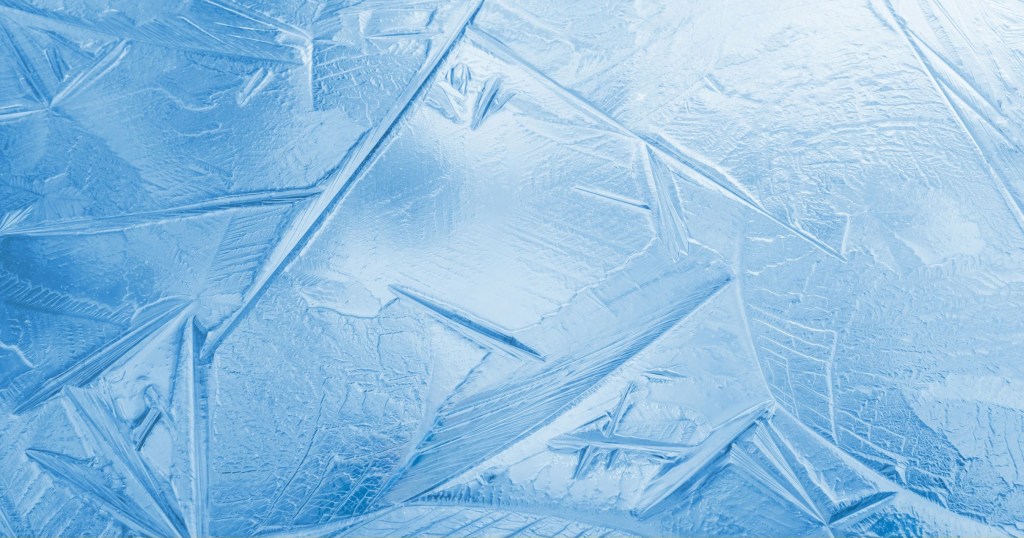
In winter, we often admire ice for its beauty.
It shines. It reflects light. It looks clean and strong.
But ice is also dangerous.
It can crack without warning.
It can separate us from what lies beneath.
This is where the idea of the glass fortress begins.
A glass fortress looks solid. From the outside, it appears calm, controlled, and untouched. People can see through it, but they cannot pass through it. It keeps the cold out—or at least that’s what it promises.
Many of us build something like this inside ourselves.
We do it slowly.
One layer at a time.
After disappointment.
After being misunderstood.
After giving too much and receiving too little.
So we decide to protect ourselves.
We stop sharing certain thoughts.
We stop reacting the way we used to.
We become careful with words, with emotions, with trust.
From the outside, everything looks fine.
People can still see us.
We still show up.
We still smile, talk, work, and function.
But there is a barrier.
Like frost on a window, it allows light in but blocks warmth.
This fortress feels safe. And for a while, it is.
Emotional distance can prevent pain.
Silence can stop arguments.
Control can reduce chaos.
But winter teaches us something important:
what protects us can also weaken us.
Ice is strong until it isn’t.
A frozen lake looks solid, but one wrong step can cause it to split. A small crack becomes a long one. What seemed unbreakable turns fragile in seconds.
The same happens with emotional coldness.
When we stay behind glass for too long, we become brittle.
Not because we are weak—but because we are holding ourselves too tightly.
We avoid pain, yes.
But we also avoid connection.
We avoid depth.
We avoid the risk that makes life real.
And here is the paradox:
The walls we build to keep ourselves safe can become the reason we feel alone.
Glass separates without making noise.
It doesn’t shout.
It doesn’t demand attention.
It simply stands there.
You can see others laughing, struggling, loving, living—on the other side. And you might tell yourself that this distance is a sign of strength.
But winter reminds us: survival is not the same as living.
Ice preserves things, but it doesn’t grow them.
There is no movement beneath a surface that never softens.
This doesn’t mean we should tear the fortress down overnight.
Protection exists for a reason.
Some winters are harsh.
Some experiences require shelter.
But even the strongest structures need flexibility.
A window can open.
A door can exist.
A crack can allow warmth to enter.
The goal is not exposure—it is balance.
You can have boundaries without freezing yourself.
You can be careful without becoming unreachable.
You can protect your heart without turning it into glass.
Winter also teaches us something hopeful.
Ice melts.
Not because it failed—but because the season changed.
And sometimes, we are the season.
We choose to soften.
We choose to speak.
We choose to feel again, even if it carries risk.
The glass fortress may have kept you safe.
But it does not have to be permanent.
You are allowed to rebuild.
You are allowed to adjust.
You are allowed to step closer to the window and open it—just enough.
Because warmth doesn’t arrive by force.
It arrives when we make space for it.
And winter, honest as it is, always reminds us:
Nothing stays frozen forever.
GK


I love this so much, the meaning is beautifully expressed!
LikeLiked by 1 person
Thank you so much. Your kindness means a lot. Have a beautiful Wednesday.
GK
LikeLike
Oh friend… this one got me.
I know exactly what you mean about that “glass fortress.” I’ve done that. Not in a dramatic way, either. More like… little by little. A disappointment here, a misunderstanding there, one too many moments where I felt like I gave my best and it still got twisted somehow. And eventually I didn’t decide to shut down so much as I just… started moving differently. Smiling, showing up, doing what needed done, but keeping certain parts of me tucked back where they couldn’t get bruised again.
That’s why the ice comparison is so spot on. Ice really is beautiful. It looks clean and strong. It even looks peaceful. But it’s also slippery and unpredictable, and you can’t build a life on it without something cracking eventually. When you said the fortress lets light in but blocks warmth, I thought, “Yep… that’s the feeling.” You’re present, but you’re not quite there. You’re participating, but also protecting. And to be honest, it can feel like relief at first.
But then you dropped that line—ice preserves but it doesn’t grow—and I felt that in my chest. Because there’s a kind of loneliness that doesn’t look like loneliness. Nothing is “wrong,” nothing is on fire, nothing is falling apart… but something inside is just still. And I don’t think it’s because we’re cold people. I think it’s because we’ve been holding ourselves too tightly for too long.
What I really appreciated is that you didn’t make it sound like the answer is to rip the whole thing down overnight. You were gentle about it. You made space for the fact that some winters really do require shelter. But you also reminded me that softening isn’t the same thing as falling apart. That opening a window isn’t the same thing as leaving the door wide open to anything that could hurt you.
LikeLiked by 1 person
Oh friend… thank you for trusting this space with something so real.
What you described — moving differently, not shutting down but holding certain parts back — that’s such an honest way to say it. That’s how it happens for most of us. Quietly. Gradually. Not as a decision, but as self-preservation.
And yes… that kind of loneliness that doesn’t look like loneliness — you named it perfectly. Nothing is broken, nothing is loud, but something inside stops moving. Not because we stopped caring, but because we’ve been careful for too long.
I’m really glad you noticed the gentleness in the piece. That mattered to me. Some winters do need shelter. Protection isn’t failure. And softening doesn’t mean undoing everything you’ve built to survive.
Opening a window isn’t surrender.
It’s discernment.
Thank you for reading with your whole heart and for putting words to something so many people feel but rarely say out loud. Your reflection added depth and life to this conversation — truly.
GK
LikeLike
Hello GK
This post is excellent. It touched my heart. Thank you for sharing. MC
LikeLiked by 1 person
Thank you. This is so kind of you. Have a wonderful day.
GK
LikeLike
Thank you. This is so kind of you. Have a wonderful day.
GK
LikeLike
“Winter also teaches us something hopeful. Ice melts. Not because it failed—but because the season changed. And sometimes, we are the season.”
Great description of winter and some seasons of life!
“Because warmth doesn’t arrive by force. It arrives when we make space for it.”
And hope of the thaw. Love it ~ Rosie
LikeLiked by 1 person
Thank you, Rosie 🤍
I love how you named it — some seasons of life. That’s exactly what winter reflects back to us. Not endings, but pauses that prepare us for change.
And yes… hope of the thaw. Not rushed, not forced — just arriving when there’s space for it. Your way of seeing always adds depth and tenderness. I really appreciate you being here and sharing that 🕊️
GK
LikeLiked by 1 person
Such a true journal piece I am looking through the cracks and opening myself to new opportunities you presented the winter perfectly
LikeLiked by 1 person
Thank you so much. I love the way you said that — looking through the cracks. That’s often how change begins, not all at once, but with small openings and quiet courage.
I’m really glad the winter image resonated with you and that the piece met you where you are. Wishing you openness, steadiness, and gentle new beginnings as you step forward.
GK
LikeLiked by 1 person
This hit home.. I need to become one with those season changes 💯
LikeLiked by 1 person
I’m really glad it resonated. Becoming one with the seasons isn’t about forcing change — it’s about listening to where you are and allowing yourself to move when the time is right. Some seasons ask us to hold, others to soften. Both are part of being whole. Thank you for sharing that — it means a lot 💯
GK
LikeLiked by 1 person
Thankyou for your kindness ýou are clearly an emotionally intelligent writer which I find amazing I treat my journal like a magazine of the good I am still distant but open to sharing. I wish my words shone of the page as clearly as yours do
LikeLiked by 1 person
Thank you — truly, that means more than you know.
I love how you described your journal as a magazine of the good. That’s beautiful, and it tells me your words already carry clarity and care, even if they don’t always feel loud or polished yet. Being distant but open isn’t a flaw — it’s a stage. It means you’re protecting what matters while still allowing light in.
And please know this: words don’t shine because they’re perfect. They shine because they’re honest. If your writing is coming from where you really are, it’s already doing its job.
Thank you for your kindness and for trusting me with such a thoughtful reflection. Your voice matters more than you think.
GK
LikeLiked by 1 person
Thankyou for your kindness I have multiple sites cornucopia the allotment about recipes, knitting patterns gardening and growing veg. Also cornucopia the legacy my poetry and ramblings of a pre divorced single mum. Finally cornucopia the recovery my combination of them all as I try to rebuild myself all work I’m proud of your words of encouragement mean alot
LikeLiked by 1 person
Sounds wonderful. Keep writing. I wish you a wonderful evening.
GK
LikeLiked by 1 person
Good evening to you
LikeLike
This was a gripping read that pulled me into the story’s tension and imagery instantly.
LikeLiked by 1 person
Thank you so much. I’m really glad the imagery and tension pulled you in — that tells me the metaphor did its work. Your words mean a lot, and I appreciate you taking the time to share how it landed with you.
GK
LikeLike
This is beautifully written and painfully honest. The metaphor of the glass fortress captures that quiet kind of self-protection so many of us live inside without realizing it. I love how you don’t shame the walls — you honor why they exist while still reminding us that warmth requires openness. It feels gentle, wise, and deeply human.
LikeLiked by 1 person
Thank you so much for reading it with such care. I really appreciate how you noticed that balance — honoring the walls without turning them into something wrong. Protection has a reason, and gentleness matters when we talk about it.
Your words capture exactly what I hoped the piece would feel like: human, honest, and kind. I’m grateful for your reflection and for the warmth you brought into this conversation.
GK
LikeLiked by 1 person
We had two large lakes we used to skate on as kids…teenagers really…young adults. When they froze, really froze, we fearlessly skated five miles side to side and back again. The excitement even thrill of skating on an as yet unknown bottomlessness filled me with excitement even a secret thrill. It was cold but oh so gentle carefree even fresh. The cool breeze whisking over your skin a whisper of the promise of freedom as you glide over the frozen surface moving almodt effortlessly. It’s like that until those frozen walls that bottomless lake are no longer a safty but a prison of our own making. I love that you point out permanence can change become undone. The desire to become part of that which is yearned for the intimacy truly desired available within reach. Lessons learned protection created can be reversed. A promise. A gentle glow not a fire at first. The melting a slow gradual happening, safe, sure, gentle, the growing confidence your expected welcomed invited and held on the warmth of reaching arms desired comfort unexpected that offers a pleasure not sexual but deep soul warming deep. So begins the true journey.
LikeLiked by 1 person
Oh… what a beautiful memory to share.I could almost feel the glide of the skates as I read your words — that thrill of trusting something frozen and wide and unknown beneath you. You captured it perfectly: the freedom, the freshness, the quiet excitement of it all. Ice can feel expansive, even magical, before we ever question its depth.
And I love how you turned that image gently toward the heart. That shift — from open frozen lake to self-made prison — is so subtle in real life too. What once felt like protection, even adventure, can slowly become confinement if we never step off the surface.
Your description of melting as a promise really stayed with me. Not a blaze, not something overwhelming. Just a gradual softening. Safe. Sure. Gentle. That kind of warmth — the soul-level kind — is exactly what I hoped the piece would point toward.
Thank you for adding such depth and lived experience to this conversation. Your reflection feels like a continuation of the story itself. Truly.
GK
LikeLike
Im humbled. Your words and incites undo me – literally…unlock, expose moments in time that are rare, unique, deep, warming, gentle and real. What a pleasure to have found your site. To share these thoughts with impunity. Knowing without a doubt are received as meant and on occasion bringing you the type of joy and acceptance you openly willingly and with great vulnerability share with us, your readers.
LikeLiked by 1 person