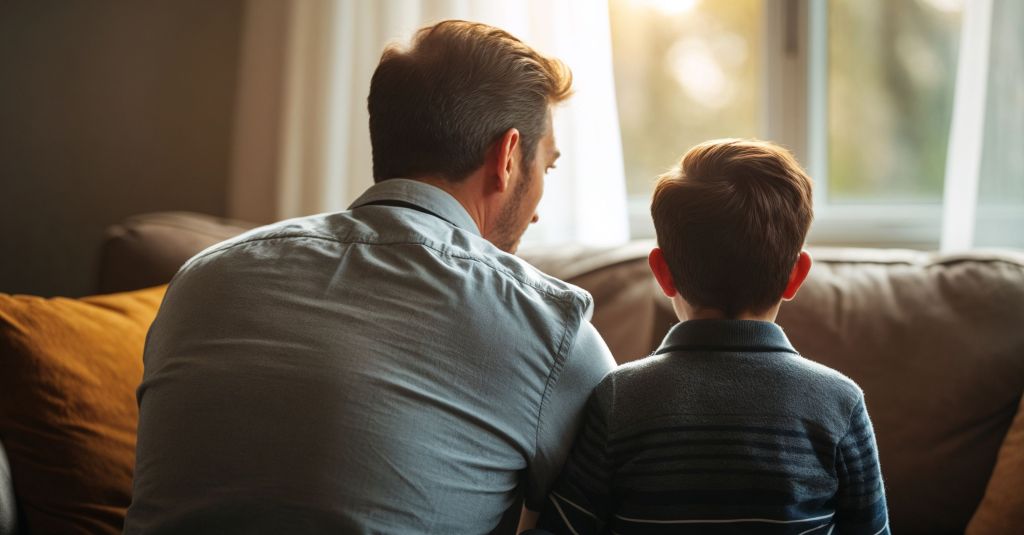
There is something I didn’t expect when I became a father.
Not the sleepless nights. Not the worries. Not even the responsibility.
It was this—how hard it can be to say, “I was wrong.”
We talk a lot about teaching our children.
We want them to be kind, responsible, honest.
We want them to listen, to learn, to grow.
But sometimes, in the middle of all that… we forget something simple.
They are watching us more than they are listening to us.
My son and I argue sometimes.
Especially about studying.
There are days when he doesn’t want to sit down, doesn’t want to focus, doesn’t want to try.
And I… I react.
I raise my voice.
I push too much.
I say more than I should.
In that moment, it feels like I’m doing the right thing. Like I’m being a “good parent.”
Strict. Responsible. In control.
But later… when everything is quiet again, I can feel it.
I went too far.
Not because I corrected him—but because of how I did it.
And this is the moment that matters most.
Not the argument.
Not the mistake.
But what comes after.
I go to him and I say something simple:
“I was wrong. I’m sorry.”
No “but.”
No explanation.
No shifting the blame back to him.
Just those words.
And every time, I feel how powerful they are.
Because the truth is… apologizing to your child is not weakness.
It is one of the strongest things you can do as a parent.
We grow up believing that authority means being right all the time.
That if we admit a mistake, we lose respect.
But I’m starting to believe the opposite is true.
When we apologize, we don’t lose respect.
We build trust.
When I say “I’m sorry” to my son, I’m not just fixing a moment.
I’m showing him something much bigger.
I’m showing him that adults make mistakes too.
That being strong doesn’t mean being perfect.
That taking responsibility matters more than being right.
And maybe most importantly…
That relationships can be repaired.
There is something else I’ve learned.
Children don’t need perfect parents.
They need real ones.
They need to see what it looks like to mess up… and then make it right.
Because one day, they will be in the same position.
They will say something they regret.
They will hurt someone they love.
And in that moment, they won’t remember our lectures.
They will remember our example.
I also realized something difficult.
Sometimes, when we say “Sorry, but…”
we are not really apologizing.
We are explaining.
We are justifying.
We are protecting our ego.
But a real apology is simple.
It doesn’t defend.
It doesn’t argue.
It just takes responsibility.
And something beautiful happens when you do that.
The tension softens.
The distance disappears.
You can almost feel the connection come back.
Not because you were perfect.
But because you were honest.
I’m not a perfect father.
I still raise my voice sometimes.
I still get frustrated.
I still make mistakes.
But I’m learning this:
What matters most is not avoiding every mistake.
It’s what we do after.
So if you ever feel like you went too far…
if your words came out sharper than you intended…
Go back.
Sit next to your child.
And say it.
“I was wrong. I’m sorry.”
Not because you have to.
But because they need to see it.
And maybe… we need to learn it too.
GK

 Georgi Kisyov – Reflections & Books
Being a parent is a huge responsibility and unfortunately, as with other life matters, we learn mostly from our mistakes. Your post addresses that so clearly. Thank you for sharing it
LikeLiked by 1 person
Thank you so much. I’ve come to believe that mistakes are part of the journey—what matters most is recognizing them and finding our way back with honesty and love.
GK
LikeLiked by 1 person