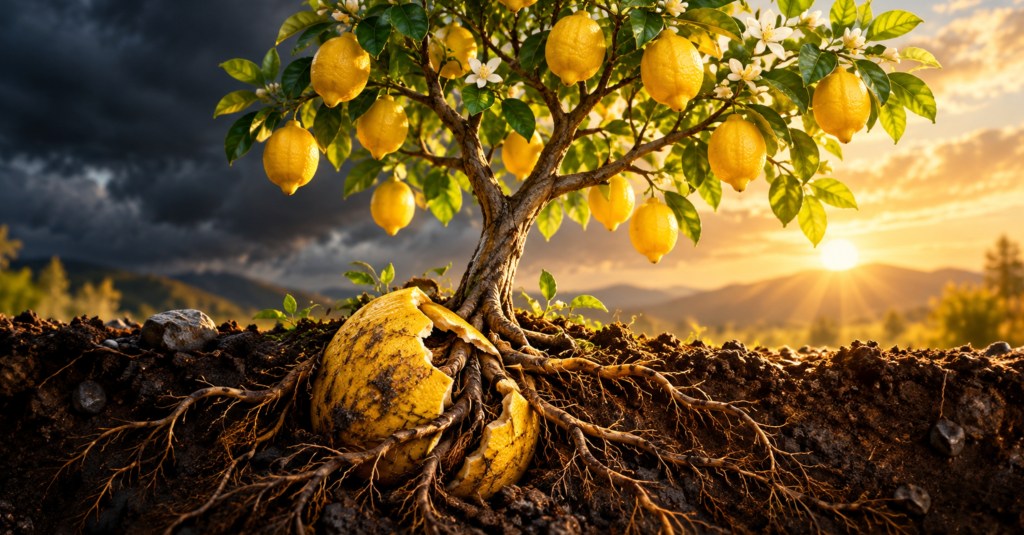
We have probably all heard the famous saying:
When life gives you lemons, make lemonade.
It is simple, positive, and easy to understand. When something unpleasant happens, try to make something good from it.
I have always liked that idea.
But about two months ago, one of my friends on Facebook wrote something that made me stop.
“If life gives you a lemon, plant a lemon tree.”
I read the sentence once.
Then I read it again.
And I saved it.
I knew I wanted to return to it someday.
Because making lemonade and planting a lemon tree may begin with the same lemon, but they are not quite the same thing.
Making lemonade changes what we have.
Planting the lemon asks what it can become.
We All Receive Lemons
Life has many ways of giving them to us.
Sometimes it is betrayal from someone we trusted. Sometimes it is an insult we didn’t deserve. It can be rejection, failure, injustice, disappointment, or simply discovering that something we hoped for will never happen the way we imagined.
Those are our lemons.
And they are bitter.
I don’t believe we should pretend otherwise.
There is a kind of positivity that asks us to turn every painful experience into something beautiful immediately. I don’t think life works that way.
Some things hurt.
Some things are unfair.
Some experiences leave marks.
Planting the lemon doesn’t mean looking at betrayal and saying, “I’m glad this happened.”
It means saying, “This happened. Now what am I going to do with it?”
There is a big difference.
Put It in the Ground
Imagine holding that lemon in your hand.
You cannot return it.
You cannot change where it came from.
You cannot make the person who gave it to you take it back.
But you can decide what happens next.
So you plant it.
Maybe betrayal teaches you to be more careful with your trust without closing your heart completely.
Maybe rejection sends you in a direction you never planned to take.
Maybe an insult teaches you that other people’s words don’t define your value.
Maybe experiencing injustice makes you more determined to treat others fairly.
Maybe failure teaches you something success never could.
None of these things erase what happened.
The lemon is still a lemon.
But underneath the soil, something is changing.
Roots are growing where nobody can see them.
And perhaps that is how much of our own growth happens too.
Quietly.
Slowly.
Out of sight.
But There Is a Problem
Then I thought about the metaphor a little more.
If I plant a lemon and eventually grow a lemon tree, what will that tree give me?
More lemons.
Lots of them.
That doesn’t sound very encouraging, does it?
After all, wasn’t the lemon supposed to represent something negative?
But perhaps this is where the metaphor becomes even more meaningful.
Growing doesn’t mean reaching a point where nothing bad ever happens again.
Wisdom doesn’t protect us from disappointment.
Strength doesn’t prevent rejection.
Kindness doesn’t guarantee that nobody will betray us.
No matter how much we grow, life will still have bitter moments.
The difference is that we are no longer the same person receiving them.
We have learned what lemons can become.
Now Make the Lemonade
The first lemon taught us how to plant.
The tree taught us patience.
And now, when the new lemons arrive, we have choices.
We can make lemonade.
We can share it.
Perhaps something we learned during one of the hardest periods of our life becomes exactly what another person needs to hear.
Perhaps our disappointment makes us more understanding when someone else is disappointed.
Perhaps the strength we grew becomes shade for somebody who is tired.
And perhaps we take some of those new seeds and plant them again.
One lesson becomes another.
One difficult experience creates wisdom.
That wisdom helps us through the next difficult experience.
And sometimes it helps someone else too.
The cycle continues.
Keep Planting
I don’t want a life without lemons.
Well… perhaps that isn’t completely true.
I certainly wouldn’t complain if life gave me fewer of them.
But I know they will come.
For all of us.
The goal isn’t to convince ourselves that bitter things are sweet.
The goal isn’t to smile through every disappointment or pretend every painful experience was secretly a blessing.
Sometimes a lemon is simply a lemon.
But we still get to decide what we do with it.
We can hold it forever and complain about how bitter it is.
We can throw it away.
We can make lemonade.
Or maybe…
we can put it into the ground.
Give it some time.
Let the roots grow.
And one day, stand beneath a tree that reminds us how much can grow from something we never wanted in the first place.
If life gives you a lemon, plant a lemon tree.
GK


Sort of parallels “give a man a fish.”
LikeLiked by 2 people
That’s a great comparison! Giving someone lemonade might help them for a moment, but teaching them to grow their own lemon tree could help them for years. And perhaps one day, they’ll have enough lemons to share with someone else. I love how both ideas remind us that lasting growth is worth more than a temporary solution.
GK
LikeLiked by 2 people
sorry. Two thoughts… one that when I was really littke, we had a lemon tree growing abd when ut reached the height of the ceiling and started to change its direction, my mother got rid of it. Not prune, it was just gone. Id grown accustomed to that tree, loved it. It grew in the corner of my room.
What struck me at the time as young as I was, was how easily she was prepared to dispose of it, without a care.
The second was two fold. That i know ppl who cut lemons in half and enjoy sucking the juice out enjoying every moment. But also that lemons are tossed our way and we dont hold out our hands gratefully unless making lemon pie smirk smirk. Ive heard many take exception to making lemonade out of the occasion, hence transforming from completely unpalatable to endurance. I like your idea if a lemon tree. Not only having experienced the pleasure of watching it grow and transform abd produce a lemon, lol, but in knowing that tart that bittersweet satisfaction frustration annoyance only lasts so long. When the new fruit grows on that tree, we can and will experience its arrival differently perhaps with a level of appreciation and acknowledgement. Just a thought. Your words mirror so many moments in my life…who knew… a lemon tree lmao but there you go. Enjoyed immensely. 😃
LikeLiked by 2 people
Thank you so much for sharing these wonderful memories and reflections! I can imagine how disappointing it must have been, especially as a child, to see that lemon tree suddenly disappear from your room. You had watched it grow, become part of your surroundings, and then one day it was simply gone. There’s something quite meaningful in that memory itself. And I love your second thought about how differently we might welcome the lemons that grow on a tree we’ve patiently cared for. Perhaps that’s because we’ve witnessed the entire journey, not just the bitter fruit at the end. We understand what it took to grow, and that changes our appreciation. It’s fascinating how one little lemon tree can bring back childhood memories and inspire so many reflections about life! Thank you for adding your own experiences to this conversation. I thoroughly enjoyed reading them!
GK
LikeLiked by 1 person
This is a very thoughtful post. I love how you don’t sugar coat anything and you’ve expanded on the concept. This line is my favorite: “Perhaps the strength we grew becomes shade for somebody who is tired.”
Thank you!
LikeLiked by 1 person
Thank you so much! I’m especially happy that this particular line stayed with you, because it carries one of the most meaningful parts of the entire reflection for me. I believe we can acknowledge how painful certain experiences are without pretending they were somehow necessary or beautiful. But if the strength we’ve gained can someday offer a little comfort to someone who is struggling, then something truly valuable has grown from that pain. And perhaps we won’t even realize how much shade our tree provides until someone chooses to rest beneath it. Thank you for reading my words so thoughtfully!
GK
LikeLiked by 1 person
Simply wondrous and wholly true. Thank you for sharing your friend’s idiom and breaking it down to size for eloquent consumption. I greatly appreciate this read, many blessings upon you and all of whom you care for.
LikeLiked by 2 people
Thank you so much for your incredibly kind words! I must give credit to my Facebook friend for planting the first little seed with her wonderful saying. I simply followed the thought to see where it might grow, and it turned into something much deeper than I initially expected. That’s one of the things I love about writing: sometimes a few simple words can open the door to an entirely new perspective. I’m truly happy this reflection resonated with you. Thank you for your beautiful blessings, and I wish the same to you and everyone you hold dear!
GK
LikeLiked by 1 person
I must state on the front end that I am an unashamed, diehard lemonaholic. 😉
That said, your words here resonated. And reminded me of 2 Cor 1:4, where Paul connects how God comforting us during times of adversity is actually an avenue for us to be able to comfort others that are going through something similar. A remarkable principle for life. Turning lemons into a way of blessing others.
LikeLiked by 2 people
First, I have to say that I love the word “lemonaholic!” And thank you so much for bringing this beautiful biblical connection into the conversation. I really appreciate the thought that the comfort we receive during our own difficult moments can become something we offer to others when they need it most. Perhaps that’s one of life’s most meaningful transformations: turning what we’ve experienced into compassion, understanding, and encouragement for someone else. Our lemon trees become even more valuable when their fruit is shared. Thank you for adding such a thoughtful perspective!
GK
LikeLiked by 1 person
This made me think about something else a lemon tree does: it eventually produces enough fruit that what began as one person’s unwanted lemon can become something that nourishes others. There is something beautifully redemptive about that. We don’t get to choose every painful thing planted in the soil of our lives, but we do get to choose whether bitterness is the only thing that grows from it. Some of the most compassionate people I have known are compassionate precisely because they remember what it felt like to hurt. Some of the best encouragers learned how to encourage because they once desperately needed encouragement themselves. The real triumph is not simply surviving the lemon; it is refusing to let what hurt us determine what we eventually give to others. Now THAT is a tree worth planting.
LikeLiked by 3 people
Thank you so much for this beautiful and deeply thoughtful reflection! I especially love what you said about people becoming compassionate because they remember what it feels like to hurt. There’s so much truth in that. Sometimes our most difficult experiences teach us how to offer others the very kindness and understanding we once desperately needed ourselves. And your observation that the real triumph is refusing to pass our pain on to others is especially meaningful. We cannot always control what life takes from us, but we can choose what we give back to the world. Perhaps that’s the most beautiful harvest our lemon tree could ever produce. Thank you for adding such a powerful perspective to this metaphor!
GK
LikeLike
I guess planting a lemon tree would be better then throwing the lemons at those who piss you off……………………lol
I liked the post
LikeLiked by 2 people
Well, I must admit that throwing a few lemons might be tempting sometimes! But planting them is probably a much better investment in the long run. At least we’ll end up with a beautiful tree instead of an angry neighbor! Thank you for making me laugh, and I’m glad you enjoyed the post!
GK
LikeLike
Then, planting it can make us more lemonade and share it.🤩
This is interesting too, but trying to look at the positive side.
LikeLiked by 4 people
Exactly! And I love the idea that one little lemon could eventually give us enough lemonade to share with many people! Of course, looking at the positive side isn’t always easy, especially when we’re going through something painful. But sometimes even a small change in perspective can help us discover possibilities we couldn’t see before. Thank you for sharing your thoughts!
GK
LikeLiked by 1 person
Yes. You’re welcome, GK
LikeLiked by 1 person
Moving from ‘making lemonade’ to ‘planting the tree’ shifts the focus from temporary coping to long-term transformation. That image of roots quietly growing underneath the soil after a painful moment was so comforting. You made a sustainable point Georgi! 😊
LikeLiked by 1 person
Thank you so much! I love how you described the difference between temporary coping and long-term transformation. And I’m especially happy that the image of roots growing beneath the soil brought you comfort. Sometimes the most important changes in our lives happen where nobody can see them, and even we may not recognize them at first. But those roots are what eventually allow us to stand stronger when another storm arrives. And I must say, your “sustainable point” made me smile! What a perfect way to describe planting a lemon tree!
GK
LikeLiked by 1 person
I completely agree with you Georgi. In that process, roots sometimes remove stuff in order to make way and sometimes entangle other roots. It’s a process where new connections happen and some rotten ones removed. This emphasises on the sustainable behavior of an organism and also on natural selection. Your post gave me an idea for a new hub post which is going to delve into human behavior and how people keep feeling guilty of removing some rotten connections for their whole life. I wish to quote you in the process (if you don’t mind). Have a peaceful weekend Georgi 😊
LikeLiked by 1 person
The poor lemon, so maligned, stigmatized to the point of having a law named after it, and yet this poor piece of allegorical fruit is responsible for building so much character and resilience. I think I’ll plant a lemon tree. 😎
LikeLiked by 1 person
Hahaha! You’re absolutely right! The poor lemon has been blamed for so many unpleasant things, and yet it has given us so much to think about! Perhaps it’s time we gave lemons a little more credit. After all, not many fruits can claim to teach us resilience, patience, and personal growth! And I’m delighted you’ve decided to plant a lemon tree. At this rate, we’re going to have an entire lemon forest! Thank you for making me smile!
GK
LikeLiked by 1 person
Absolutely! Sometimes, something good comes from what seems negative, and in the end, it proves beneficial for the rest of our lives. So we definitely need to keep planting more lemon trees.
LikeLiked by 1 person
Absolutely! Sometimes we only recognize the value of a difficult experience years later, when we realize how much it changed our perspective or helped us make better decisions. And I think that’s one of the most encouraging parts of this metaphor. We cannot always choose the lemons life gives us, but we can keep choosing to plant something meaningful with them. Who knows how beautiful our gardens might become over time? Thank you for sharing your thoughts!
GK
LikeLiked by 1 person
You are so right about that.
LikeLiked by 1 person
Thanks
For liking my post ‘FBW2’ 🌹 🙏
LikeLiked by 1 person
“But you can decide what happens next. So you plant it.”
I think this my favorite part of this post. There are a few trees to plant.
~ Rosie
LikeLiked by 1 person
Thank you so much, Rosie! I’m especially happy that this line stayed with you, because I believe it carries the heart of the entire message. We cannot rewrite what has already happened, but we still have a say in what comes next. And yes, sometimes life leaves us with quite a few trees to plant! Some may take longer to grow than others, but every little step matters. Perhaps one day we’ll look back and realize that what began as a handful of bitter lemons has become a beautiful garden. Thank you, Rosie, for always reading my words with such care!
GK
LikeLiked by 1 person
Congrats! This one will be re-posted for your November – In Others’ Word post!
~ Rosie
LikeLiked by 1 person
Once again you’ve come up with yet another mind-opening analogy for life. Within another analogy no less! I love the idea that lemons are the struggles we’re handed, but can be grown into something more. For the small fruits, bitter though they are, have a surprising aftertaste of sweetness, the two flavours entangling together.
LikeLiked by 2 people
Thank you so much for your beautiful words! I especially love your thought about bitterness and sweetness becoming entangled together. That’s such a wonderful way to describe life itself! Our difficult experiences don’t always lose their bitterness, even after we’ve grown from them. But sometimes, with time, we begin to recognize the wisdom, strength, and unexpected sweetness that came afterward. And I must give credit to my Facebook friend for planting the original idea in my mind. I simply watched where it might grow! Thank you for adding another beautiful layer to this metaphor.
GK
LikeLiked by 2 people
Thank you for acknowledging the work of it. Here with you. Working the day job. Working the land. Living the life. Loving the goodness of it. Grateful to you for putting words to the goodness that it is so easy to forget in the midst of the angst…the angst is always there. And it is ok. A part of it all.
LikeLiked by 2 people
Thank you so much for sharing these beautiful thoughts! I especially appreciate what you said about acknowledging the work, because growth isn’t always an easy or beautiful process. It takes patience, effort, and sometimes the courage to keep going when we cannot yet see the results. And you’re absolutely right that the difficult feelings don’t simply disappear because we choose to appreciate the goodness in life. They can exist together. Perhaps that’s part of learning to live fully: accepting that life can be difficult and wonderful at the same time, while continuing to care for the little things that make it meaningful. I love your words about working the land, living the life, and loving its goodness. Thank you for adding such a genuine perspective!
GK
LikeLiked by 1 person
I love the symbolism of the lemon tree. To me, it represents more than just making the best of a difficult situation. It’s about growth and taking something that wasn’t necessarily good and allowing something meaningful to grow from it. There’s a big difference between simply getting through something and actually growing because of it.
LikeLiked by 1 person
Thank you so much for this thoughtful reflection! I especially love your last sentence, because you’ve captured the heart of what I wanted to express. There’s a difference between surviving a difficult experience and allowing it to change us in a meaningful way. And sometimes that growth takes years before we even recognize it. We don’t have to call the painful experience a blessing, but we can appreciate the strength, wisdom, and understanding that eventually grow from it. That’s why I find the idea of planting a lemon tree so meaningful. We’re not simply dealing with today’s lemons; we’re growing something that may help us for the rest of our lives.
GK
LikeLike
Thanks
For liking my post ‘Manpasand’ 🌹 🙏
LikeLiked by 1 person
What a lovely post! The idea of planting the lemon to see what it will produce is a great analogy. Yes, making lemonade is good, too, but I like the idea of the lemon growing roots and becoming a tree. I suppose we could look at it in different ways, though!
LikeLiked by 1 person
Thank you so much! I love that you’ve mentioned the possibility of looking at this metaphor in different ways, because that’s what makes it so interesting! Making lemonade teaches us to find something positive in a difficult moment, while planting the tree reminds us that growth takes time and patience. And perhaps we don’t have to choose between the two. We can make a little lemonade today while planting something that will benefit us tomorrow. Thank you for sharing your lovely perspective!
GK
LikeLike