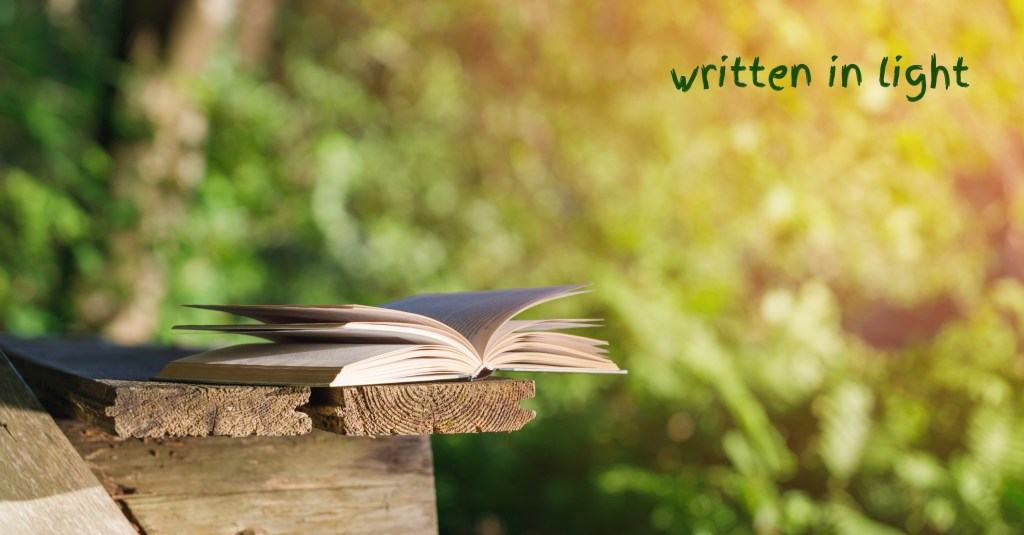
The sun does not write with ink. It writes with heat.
If summer is a poem, then the sun is its restless author — leaning over the world with sleeves rolled up, filling every field, street, and rooftop with a language made of light. We do not read its words with our eyes at first. We read them with our skin. We feel them on our arms, on the back of our neck, in the warm air that drifts through an open window before we even understand what it is trying to say.
The first lines arrive at dawn.
They slip quietly into the room and stretch across the floorboards in pale gold. The morning sun is always gentle, as if it is afraid to wake the sleeping world too quickly. It writes in soft cursive across the bedroom wall. It places commas of light between the curtains. It leaves small golden periods on the edge of the bed.
Summer mornings always feel as though the sun is beginning a new page.
Outside, the world still belongs partly to the night. The grass is wet. The streets are empty. The trees stand silently, holding their breath. But slowly, line by line, the sun begins to write.
The birds become its punctuation. Their songs appear between the branches like little exclamation marks. The first breeze becomes a paragraph break. The smell of warm grass and damp earth becomes the opening sentence of another summer day.
As the morning grows, the sun becomes bolder.
Its handwriting changes.
The soft cursive of dawn becomes thick, heavy letters. By noon, the sun is no longer whispering. It is speaking in capital letters.
The sidewalks glow. The black asphalt trembles beneath waves of heat that rise into the air like invisible smoke. The gardens seem brighter than they should be, their colors almost too alive to look at. The leaves on the trees are no longer simply green. They are the deepest, loudest green of the year, as though the sun has dipped its pen into every shade it owns and used them all at once.
The sun is not a quiet poet.
It does not believe in half measures.
It writes the longest days and the shortest nights. It creates shadows so dark they look painted beneath benches and porches. It freckles shoulders, fades old fences, dries the laundry on the line, and leaves golden marks on every living thing it touches.
Even the cracked earth in a dry garden bed feels like part of the poem. Even the shimmering air above a parking lot has its place. Summer is not delicate. It is large and wild and impossible to ignore.
Perhaps that is why the sun’s poetry feels so different from our own.
When we write, we often search for the perfect word. We erase. We hesitate. We stop and begin again. But the sun never doubts itself. It writes across the sky with complete confidence. Every day, it begins again without asking whether yesterday was better.
Maybe that is one of the lessons summer tries to teach us.
To stop worrying so much about writing something perfect and simply write.
I think that is why I always carry a notebook with me in summer.
There is a small park near my home where I love to go on warm afternoons. I sit on the same old bench beneath a large tree. The bench is nothing special. The paint is beginning to peel, and one side leans slightly lower than the other. But in summer, it feels like the best place in the world to write.
I open my red notebook on my lap and wait.
The sun slips through the leaves in scattered pieces. Light and shadow move across the pages of my notebook together, as if they are writing beside me. One moment, a sentence rests in shade. The next moment, it shines in gold. The leaves overhead sway gently, and the sunlight dances across the paper like it cannot decide where to stay.
Sometimes it feels as though the tree and the sun are helping me write.
The shadows make their own quiet handwriting across the page. The light underlines certain words. The breeze turns the page for me when I have reached the end, as though it is saying, Continue. There is more.
And so I do.
I keep writing while the afternoon slowly leans toward evening.
Because evening is always the most beautiful part of the sun’s poem.
By then, the sun has grown tired. Its fierce voice softens. The bright white heat of noon disappears, and the sky begins to fill with colors that do not seem real. Coral. Amber. Pink. Violet. The whole sky becomes a page covered in watercolor.
The sun, which spent all day speaking loudly, now whispers.
Its final lines are the gentlest ones.
The trees become dark shapes against the glowing horizon. The air cools. The birds grow quieter. Even the earth seems to sigh with relief. Yet the warmth remains, still rising softly from the sidewalks, the benches, the grass. It is as though the world is still holding the memory of the words the sun spent all day writing.
Then, slowly, the last line disappears.
The page turns.
Night begins.
But even after the sun is gone, its poem remains inside us.
On freckled shoulders. On warm skin. In the smell of grass and old notebooks. In the memory of sitting beneath a tree while light and shadow wrote beside us.
Summer is the sun’s masterpiece.
A golden poem written slowly across the longest days of the year.
And perhaps that is why we miss it so much when it is gone. Not because summer is perfect, but because for a little while, the world feels as though it has been written in light.
GK


Light does more than make things beautiful—it reveals them. Morning light has a rather unapologetic way of finding the dust we were perfectly content not knowing was on the furniture. Spiritually, God’s light can be much the same. “But all things that are reproved are made manifest by the light: for whatsoever doth make manifest is light” (Ephesians 5:13). We usually love the idea of God illuminating our path; we are sometimes considerably less enthusiastic when He illuminates us. Yet there’s mercy even in that. God doesn’t shine His light into our lives just to expose what needs changing, but to help something grow there as well. A plant will bend itself toward a window because it was created to reach for light, so I have to consider that perhaps we were created to turn toward the Light too. Jesus said, “I am the light of the world: he that followeth me shall not walk in darkness, but shall have the light of life” (John 8:12). And unlike summer sunlight, His light doesn’t disappear when evening comes. There are seasons when life looks considerably more like November than August—when there’s considerably less warmth, and we cannot see much beyond the next step. Yet the Source has not moved simply because clouds have gathered. “Truly the light is sweet, and a pleasant thing it is for the eyes to behold the sun” (Ecclesiastes 11:7), but sweeter still is knowing the One who spoke that sun into existence. Everywhere light falls, it quietly leaves the signature of its Author.
LikeLiked by 2 people
That is such a thoughtful extension of the metaphor. I especially love your thought that light does not only reveal what needs changing, but also helps something grow—there is so much hope in that. Thank you for taking my reflection about the sun and carrying its light into a deeper spiritual meaning.
GK
LikeLiked by 1 person
That’s beautiful! I love the part where you say, “Light and shadow move across the pages of my notebook together, as if they are writing beside me. “ Light and shadow seem to have a relationship with you. Perhaps it comes from a place of love and appreciation.
I love your park bench. I had to chuckle though. My settings are quite different. I’d have to add the sound of the rooster competing with the neighbor rooster to raise the sun up from its sleepiness.
Lastly, I love how you acknowledged the sun’s parting gifts, like the freckles on your shoulders. But most of all, that whole of the truthfulness is the last part, where you mentioned that it’s the light. Yes, our Heavenly Father, who comes from a place of light in its entirety, and is nothing but light, knows how much we yearn for that light. Thanks, my friend, for reminding us again!
—Shirley
LikeLiked by 1 person
Thank you, Shirley! I had to smile at the roosters competing to wake the sun—your version of my park bench certainly has a livelier soundtrack! I think you’re right about my relationship with light and shadow; perhaps photography taught me to appreciate both, and writing simply gave me another way to notice them. And I always appreciate the deeper meaning you find in my words and the light you bring to them through your faith.
GK
LikeLiked by 1 person
Oh how how I learnt to recognise the capital letters which the noonday sun writes with this summer, words to hide from!
I will take to heart your words about not searching for the perfect words but just to write!
In England, even though it’s just as hot and dry, we are getting very dark nights now, the year is moving on!
Thank you.
LikeLiked by 2 people
I smiled at “words to hide from” — I think the noonday sun has been writing in very large capital letters this summer! I’m so glad the reminder to simply write spoke to you. And those darker evenings are such a gentle reminder that, however much summer still insists it is here, the next season is already beginning to turn the page.
GK
LikeLiked by 2 people
I LOVE this essay/poem. I feel each description in my soul, on my skin, in my heart.
Sometimes I do exactly what you describe – but instead, with my camera. I seek small things to shoot that are representative of magic moments – time alone in nature, absorbing the warmth, scents and textures of the day.
Ceci Snow imagesbyceci@gmail.com
Website: http://www.imagesbyceci.com
Please Note: Any email containing my photographs may be forwarded, in its entirety, with credit given to Ceci Flanagan-Snow and/or Images by Ceci. However, copying, downloading or using any photograph in any manner without written permission from the photographer is prohibited and a copyright violation. Thank you for respecting my copyright.
>
LikeLiked by 2 people
I love that you experience those moments through your camera in much the same way I do through my notebook. Perhaps photography and writing are not so different after all—we both notice those small pieces of beauty and try to preserve what the light gives us before the moment passes. Thank you so much for feeling this one so deeply.
GK
LikeLiked by 1 person
Yes, “the world is written in light”. I sometimes feel that everything is made of light, made of different densities of light, including us, even when feeling our darkest moments. We would not know the light if we did also know the dark.
thank you., once again.
LikeLiked by 2 people
What a beautiful thought—that perhaps even in our darkest moments, the light is still part of us. I agree, I think we understand and appreciate light differently because we have known the darkness too. Thank you for adding such a thoughtful perspective to my words.
GK
LikeLike
Such a deep, thoughtfully written poem that made me pause and reread it. It deserves more recognition!
LikeLiked by 2 people
Thank you so much! Knowing that it made you pause and read it again means a lot to me. Sometimes those are the best compliments a writer can receive.
GK
LikeLiked by 1 person
I am speechless at the eloquent beauty in this ode to summer. You brought tears of gratitude. You touched my heart and soul on every possible level.
So often we take for granted the season we are in. oh it’ll be cooler soon, falls soon here. Or vice versa, decrying winter longing for summer only to repeat the process year in and out. Never settled comfortable accepting of what is.
The warmth and beauty. Collaboration of sun and earth and us is so beautifully captured. I will never look at summer without remembering the exquisitness of your descriptions and acceptance in the moment, enjoying, not wishing and end but revelling instead.
Truly the most beautiful ode, sonnet poem if you will ive ever had the privilege of enjoying. brava dear friend, Brava.
LikeLiked by 1 person
Your words truly touched me. I love what you said about how often we spend one season waiting for the next instead of noticing what is right in front of us—that is such a beautiful way to understand this piece. And knowing that something I wrote might make you look at summer a little differently is one of the greatest compliments I could receive as a writer. Thank you, dear friend, for reading it with such an open heart.
GK
LikeLike
You are the only one who could make summer into poetry!
I’ve never quite thought of summer in this way, only hot and humid. You do bring out the best of each season so I will take it as how it feels in early summer before that heat and humidity. Or late summer when the evenings cool down.
Lovely!
LikeLiked by 1 person
Thank you, Rosie! I’ll happily accept the challenge of finding a little poetry even in the heat and humidity. Perhaps every season has its beautiful lines—we just have to catch them at the right time of day. Thank you, my friend!
GK
LikeLiked by 1 person
This is really beautiful.
LikeLiked by 2 people
Thank you so much. Have a beautiful Sunday evening and a wonderful new week.
GK
LikeLiked by 1 person